Most spice varieties have no author. They come out of centuries of unrecorded selection, and by the time anyone writes them down the trail is cold. Seremna is an exception — we know the village, the year, and the man who noticed.
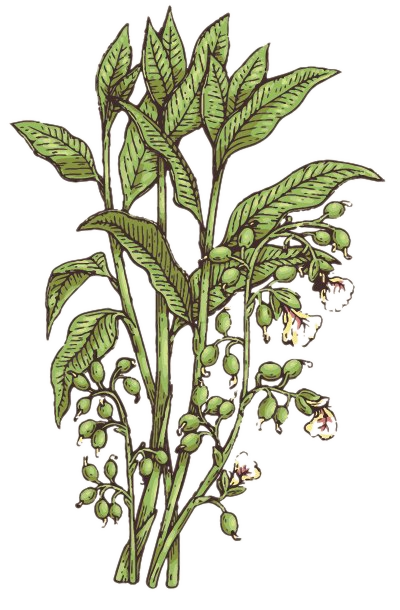
Hee Gaon, 1982
Hee Gaon sits at 1,200–1,350 metres in West Sikkim, between the Hee, Kalez and Rangeet rivers, taking three to four thousand millimetres of rain a year. Large cardamom grows there in the shade of utis — Himalayan alder — on steep terraces where little else is worth planting.
In 1982 the late Sukh Ram Subba, a grower there, noticed one clump behaving differently. Bigger capsules. Better yield. Shrugging off the diseases that regularly flattened neighbouring plants.
He could have simply harvested it. Instead he raised saplings from it and began pressing his neighbours to plant it too. From 1985 the valley took it up in numbers. They called it Seremna, from a Limboo word for drooping leaves.
Why it spread
More seed than other cultivars, so the dried pod stays heavy — and the trade sells by weight.
Sub-spherical and dark maroon, about two centimetres across.
A smallholding crop across roughly 270 hectares.
Of all Seremna grown anywhere, still from this valley and the villages beside it.
The husk is thin, so Seremna cures faster than other large cardamoms — and the calyx falls off by itself during curing. On other cultivars that little tail has to be trimmed with scissors as a separate job. Bigger pods, more seed, no trimming: that's the premium.
The bit everyone gets wrong
Black cardamom is famous for smoke, and nearly every description treats the smoke as the point — including, until we read the growers' own filing, one of ours.
The Hee Gaon growers deliberately burn dry wood to keep the smoke down, because heavy smoke costs the capsule its colour and aroma. The fire is there to dry the pod, not to flavour it.
A good pod tastes of resin and warmth with a trace of woodsmoke behind it. If it tastes mainly of ash, it was cured badly.
Why the village, not the state
Seremna is grown elsewhere, and the growers say plainly it isn't the same — the climate and geology of that particular valley give the Hee Gaon crop a character the transplanted version doesn't reproduce.
Which is why their cooperative applied for a Geographical Indication in the name of the village rather than Sikkim. Most spices on an Indian shelf can't name the district. This one names the man.
Questions
What is Seremna cardamom?
A cultivar of large black cardamom, Amomum subulatum, identified in 1982 in Hee Gaon, West Sikkim — prized for large capsules, high seed count and a self-shedding calyx.
Why is black cardamom smoky?
It's dried over wood fire in a bhatti kiln. Good growers minimise the smoke, so a well-cured pod carries only a trace of it.
VIROOT sells Seremna black cardamom from Hee Gaon. Not sure which cardamom you need? See green vs black cardamom.